25 Mountain Gorilla Facts Every Trekker Should Know
How many are left, how strong they really are, and why there is not a single mountain gorilla in captivity anywhere on earth.
 Eben Safari Tours TeamUpdated 3 min read
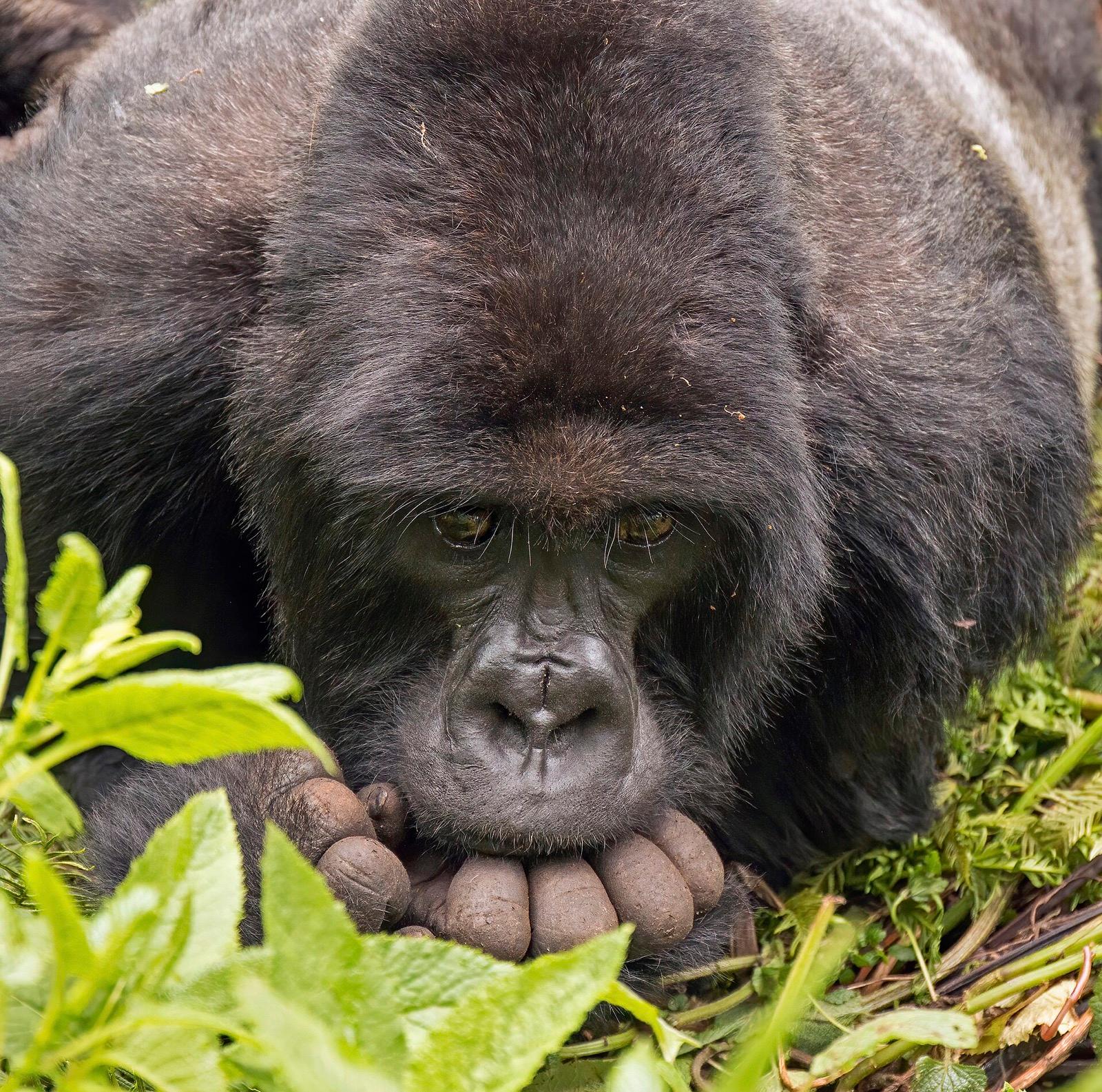
Everything below comes up at the Kinigi briefing or on the walk back down. Knowing it in advance makes the hour richer.
Population and status
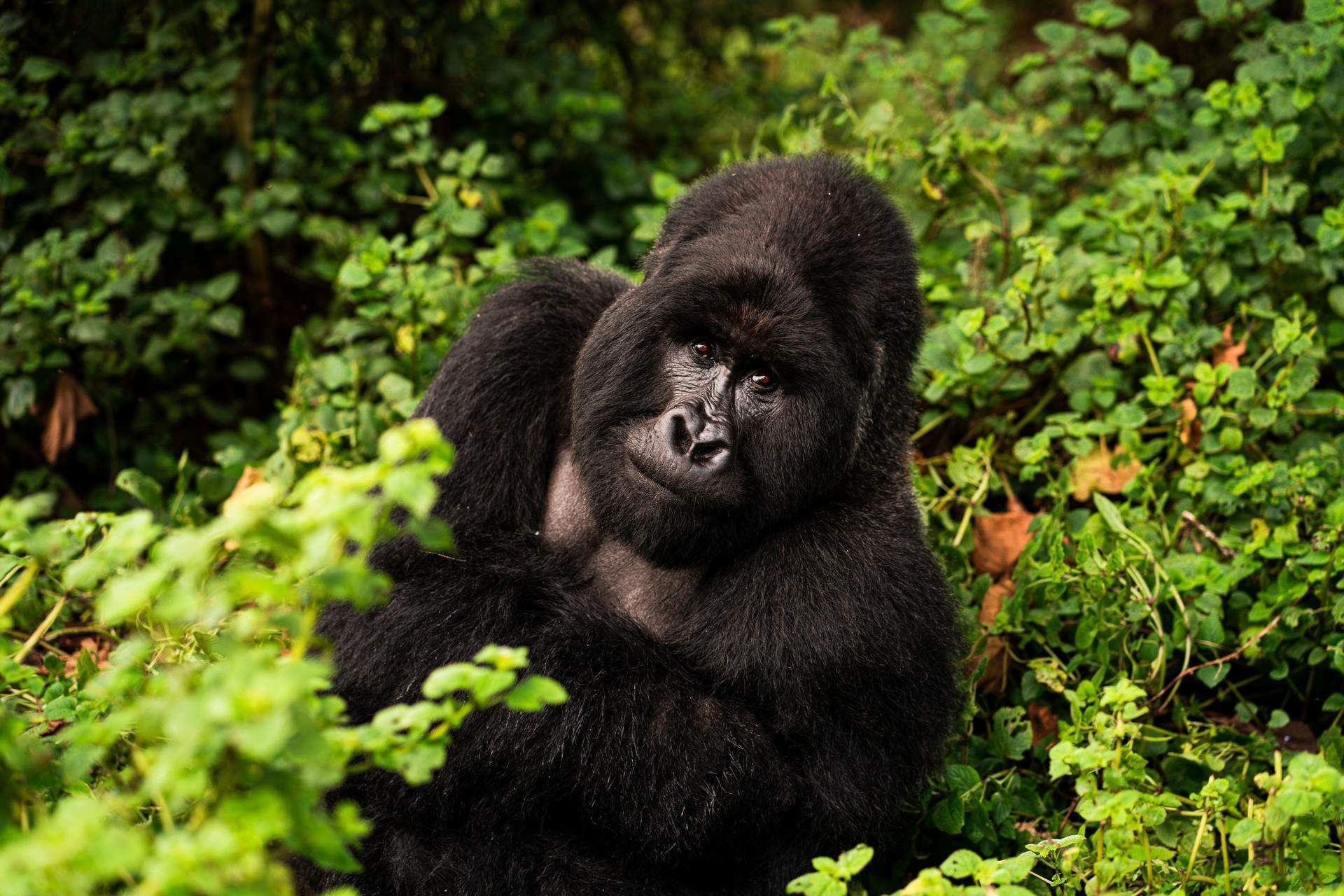
1. There are approximately 1,063 mountain gorillas in the world — the figure from the most recent coordinated censuses of the Virunga Massif and Bwindi.
2. In 1981 there were an estimated 242. The recovery is one of conservation's few unambiguous successes.
3. In 2018 the IUCN downgraded them from Critically Endangered to Endangered. They are the only great ape whose population is increasing.
4. They live in exactly two places: the Virunga Massif (Rwanda, Uganda, DR Congo) and Bwindi Impenetrable Forest in Uganda.
5. There is not one mountain gorilla in captivity anywhere on earth. Every attempt has failed. The only way to see one is to walk into their forest.
Size and strength
6. An adult male silverback weighs 160–200 kg and stands about 1.7 m upright.
7. Females are roughly half the weight, 70–100 kg.
8. A silverback is estimated to be four to nine times stronger than an adult human.
9. Their arm span can reach 2.3 metres.
10. The silver saddle appears at about 12 years old, marking maturity.
Diet and daily life
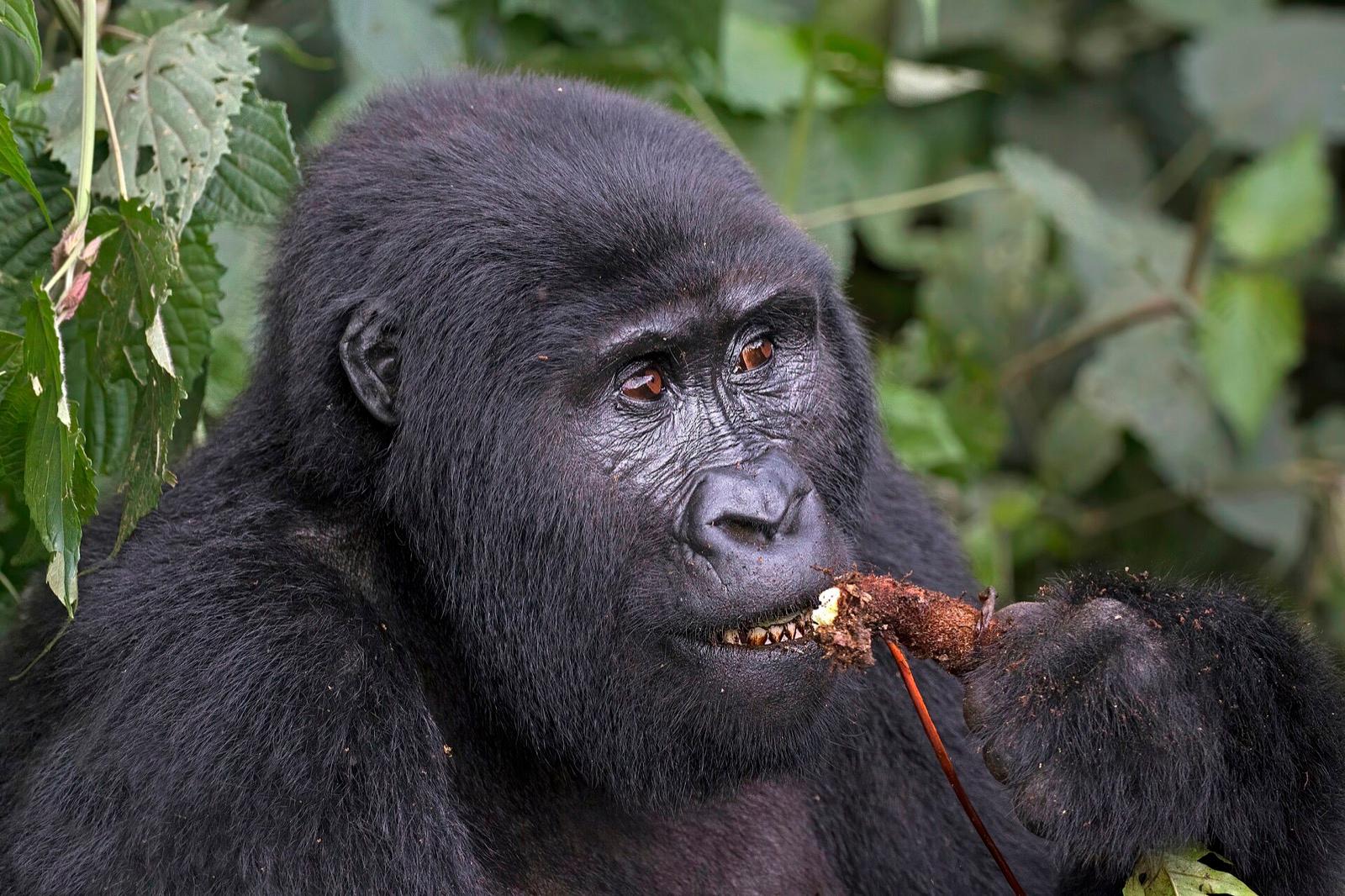
11. They are overwhelmingly herbivorous — bamboo shoots, wild celery, thistles, nettles, bedstraw, roots and bark.
12. An adult male eats 18–30 kg of vegetation a day.
13. They rarely need to drink; their food is roughly half water.
14. They occasionally eat ants and grubs, but no meat.
15. A gorilla day is roughly 30% feeding, 30% travelling, 40% resting. The midday rest is when most treks arrive, which is lucky for visitors.
16. They build a fresh nest every single night, on the ground or in low vegetation. Trackers find families by locating the previous night's nests.
Family and behaviour
17. Families range from about 5 to more than 30 individuals, led by one dominant silverback.
18. The silverback decides everything: where to feed, when to move, where to sleep, and he mediates every dispute.
19. Females transfer between groups; males often leave to form their own.
20. Gestation is 8.5 months, and a female has her first infant at around 10 years old, then one roughly every four years.
21. Infants ride on their mother's back from about four months and stay with her for three to four years.
22. Gorillas use at least 25 distinct vocalisations — grunts, barks, hoots, roars, and the contented rumbling "belch vocalisation" you will hear while they eat.
23. Chest-beating is a display, not an attack. It carries over a kilometre and is mostly about announcing presence.
Us and them
24. Mountain gorillas share about 98% of human DNA, which is precisely why a human cold can kill one, and why the 7-metre rule and mask requirements exist.
25. Each gorilla has a unique nose print, as individual as a fingerprint. Researchers identify individuals by the shape of the nostrils and the bridge between them.
Why the recovery happened
Three things, together: Dian Fossey's anti-poaching work from 1967 at Karisoke, the creation of high-value, low-volume permit tourism that made a live gorilla worth vastly more than a dead one, and revenue sharing that gave communities around the parks a direct financial stake.
Every US$1,500 permit sends 10% straight to those communities. Read more in where your gorilla permit money goes.
Ready to meet them? Start with our 3-Day Rwanda Gorilla Trekking Safari.
Frequently asked questions
How many mountain gorillas are left in the world?
Approximately 1,063, living only in Rwanda, Uganda and the Democratic Republic of Congo. The number has risen from about 242 in 1981.
Why are there no mountain gorillas in zoos?
Every attempt to keep mountain gorillas in captivity has failed. They do not survive outside their high-altitude forest habitat, so trekking is the only way to see one.
How strong is a silverback gorilla?
An adult silverback weighs 160–200 kg and is estimated to be four to nine times stronger than an adult human — though they are herbivores and charges are almost always bluff.

Written by the Eben Safari Tours team
We are a Kigali-based tour operator, guiding travellers through Rwanda, Uganda, Kenya and Tanzania since 2015. Our guides trek with the gorillas, drive Akagera and climb the volcanoes every week, and we update these guides whenever rules or prices change.