How to Support Local Communities While Touring Rwanda
Hire the porter, buy from the co-operative, stay at the community lodge — and never hand money to children.
 Eben Safari Tours Team4 min read
Rwanda's gorilla permit already directs 10% of park revenue into community projects. That is the baseline. Here is how to go further.
1. Book with a Rwandan-owned operator
The single biggest lever. An international reseller takes 25–40% of what you pay and sub-contracts the actual work to a local company. Booking directly with a Rwanda-registered, RDB-licensed operator keeps that margin in the country, where it pays Rwandan salaries and Rwandan taxes.
Ask: "Where is your company registered, and are your guides employed by you?"
2. Hire a porter
US$10–20 on a gorilla trek. The best-value contribution a visitor can make.
Porters come from the villages immediately around the park. Many are former poachers; the porter rota is part of a deliberate programme to make the gorillas worth more alive to the people living closest to them. The fee goes directly to them, not through an intermediary, and US$15 is a good day's wage in a rural Rwandan household.
Hire one even if you are fit. More on porters.
3. Stay at community-linked lodges
Sabyinyo Silverback Lodge is owned by the Sabyinyo Community Lodge Association — a community trust representing thousands of local households — and managed on their behalf. Revenue flows directly to villages around Volcanoes National Park. It is also an excellent lodge in its own right.
Several other properties run substantial community programmes: Bisate Lodge's reforestation and employment work, Singita Kwitonda's nursery and farm, and most lodges employ almost entirely locally. Ask any lodge what their community programme actually is, and expect a specific answer.
4. Buy from co-operatives
Not from roadside hawkers, where the margin usually goes to a middleman.
- Azizi Life (near Muhanga) — spend a day living and working with a women's co-operative: farming, weaving, cooking, eating together. One of the most genuine experiences in Rwanda.
- Agaseke basket co-operatives — many were formed as reconciliation projects, bringing together survivors and perpetrators' families.
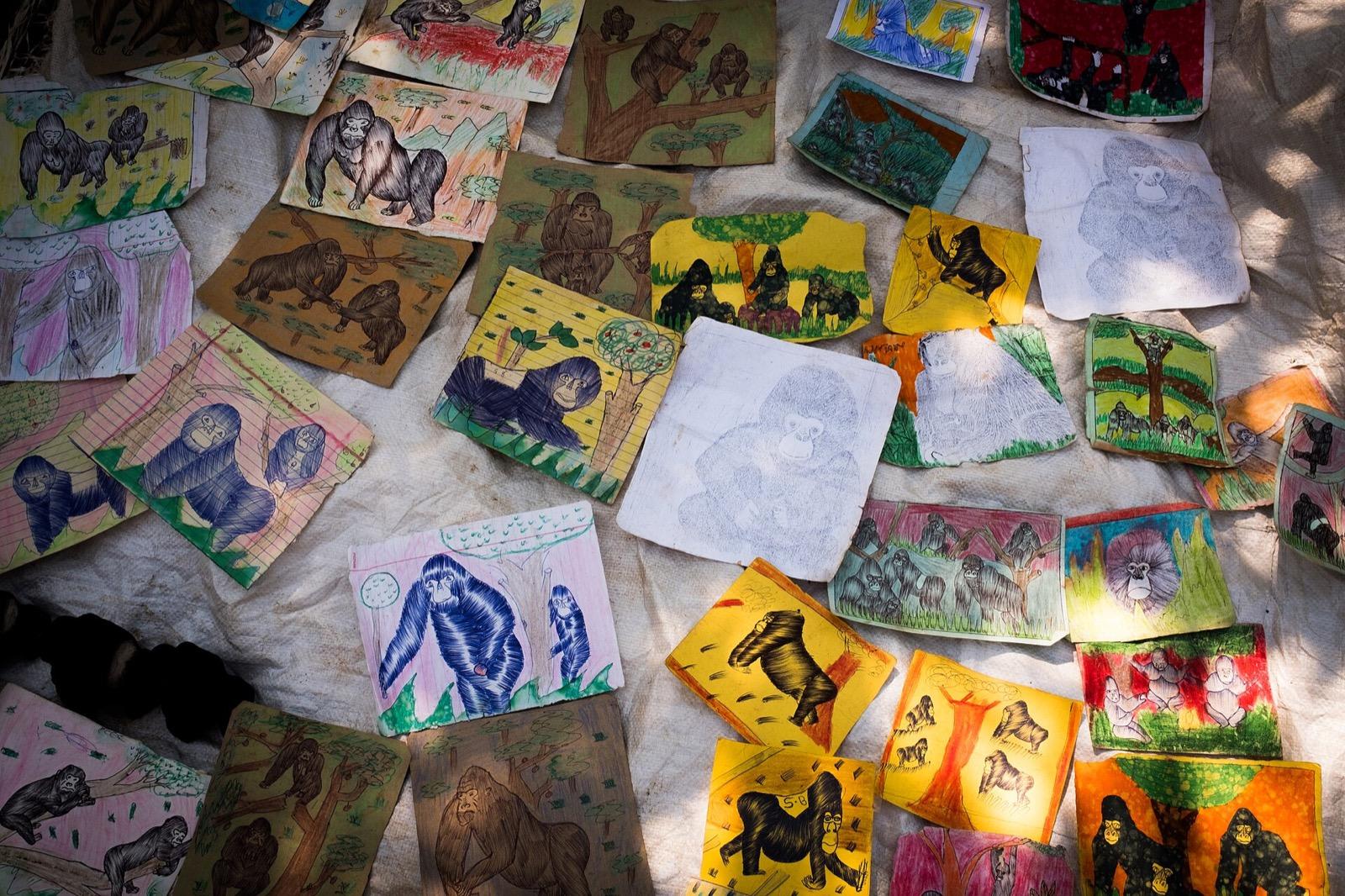
- Kakira Imigongo Co-operative — the geometric cow-dung art of eastern Rwanda, made and sold on site.
- Question Coffee, Kigali — works with 30,000 women smallholder farmers; the cupping sessions and farm visits are excellent.
- Caplaki Craft Village, Kigali — many co-operative stalls, though bargain carefully.
- Nyamirambo Women's Centre — the walking tour (US$25) and their tailoring workshop fund literacy and vocational training.
5. Visit the community tourism projects
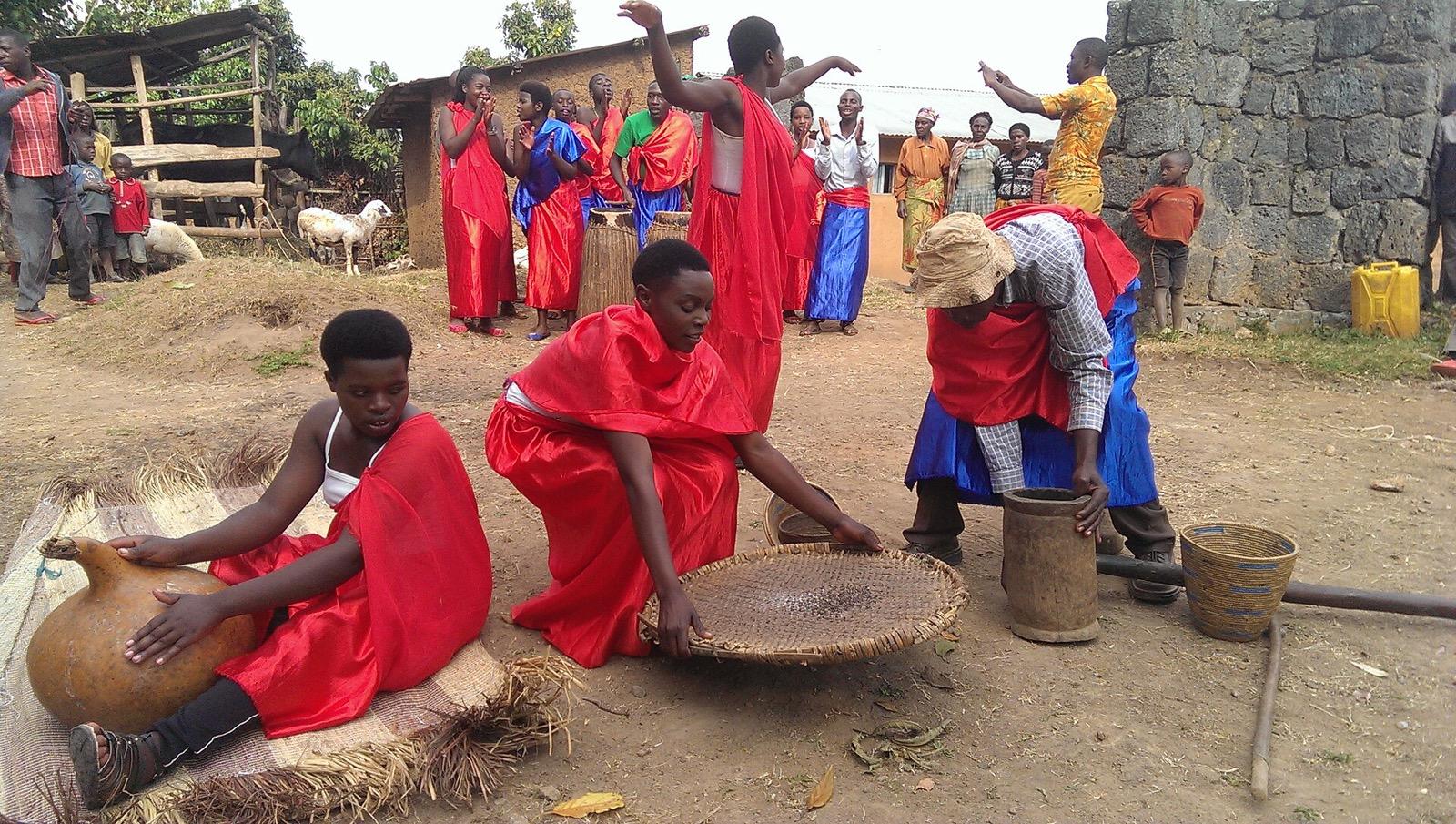
- Gorilla Guardians Village, Musanze — former poachers running a cultural centre. US$30–40.
- Bigodi Wetland Sanctuary (Uganda, if you cross) — community-run and excellent.
- Red Rocks, Musanze — cultural centre and social enterprise.
6. Eat and drink locally
The mélange buffet — rice, beans, plantain, cassava leaves — costs US$3 and the money stays entirely local. Local restaurants, roadside brochettes and neighbourhood bars all keep spending in the community in a way lodge dining does not.
7. Tip properly
| Porter | US$5–10 on top of the fee |
| Ranger guide | US$10–20 per person |
| Trackers | US$5–10 each |
| Driver-guide | US$10–20 per day |
| Lodge staff tip box | US$5–10 per night |
Full detail: tipping in Rwanda.
8. Stay longer and go further
Spend a night in Musanze or Huye rather than passing through. Visit the Ethnographic Museum, the King's Palace, Rugezi Marsh, Gishwati-Mukura — places outside the standard circuit where tourist money is scarcer and goes further.
What not to do
Do not give money, sweets or pens to children. This is the most important item on this page. It encourages begging, pulls children out of school and undermines parental authority. Rwandan schools and communities actively discourage it, and children who beg from tourists earn more in an afternoon than their parents do in a day — which is exactly the problem.
If you want to help children, donate to a school, a scholarship fund or a community organisation.
Do not photograph people without asking. Always ask. A smile and a gesture at your camera is enough.
Do not hand out gifts at random. If you have brought something useful — footballs, school supplies, reading glasses — give it to a school, clinic or community leader to distribute.
Do not haggle aggressively over a few hundred francs with an artisan. Bargain good-humouredly, then pay fairly.
Do not visit a "village tour" that feels like a human zoo. If people are being observed rather than interacting with you, and the money is going to an operator rather than the community, go elsewhere.
Do not donate used clothing informally. Rwanda restricted second-hand clothing imports deliberately, to protect its domestic textile industry.
The bigger picture
Mountain gorilla numbers have risen from about 242 in 1981 to roughly 1,063 today, and the primary reason is that Rwanda made gorillas economically more valuable to local communities alive than dead. Your trip is part of that mechanism.
Read where your permit money goes, or ask us to build community visits into your itinerary.
Frequently asked questions
How can tourists support local communities in Rwanda?
Book with a Rwandan-owned operator, hire a porter on your gorilla trek, stay at community-owned lodges like Sabyinyo Silverback, buy from co-operatives, eat locally and tip guides and lodge staff.
Should I give money to children in Rwanda?
No. It encourages begging and pulls children out of school. If you want to help, donate to a school, scholarship fund or community organisation instead.
Which Rwandan lodge is community-owned?
Sabyinyo Silverback Lodge, owned by the Sabyinyo Community Lodge Association representing thousands of local households around Volcanoes National Park.

Written by the Eben Safari Tours team
We are a Kigali-based tour operator, guiding travellers through Rwanda, Uganda, Kenya and Tanzania since 2015. Our guides trek with the gorillas, drive Akagera and climb the volcanoes every week, and we update these guides whenever rules or prices change.