What's the Carbon Footprint of Gorilla Trekking?
The flight is 95% of it. Here is the honest accounting, and what actually reduces the impact.
 Eben Safari Tours Team3 min read
A fair question, and it deserves an honest answer rather than a marketing one.
The rough accounting
| Component | Approximate CO2e |
|---|---|
| Return flight, US East Coast ↔ Kigali, economy | 2.5–3.5 t |
| Return flight, Western Europe ↔ Kigali, economy | 1.5–2.5 t |
| Return flight, within Africa | 0.3–0.8 t |
| Business class | Roughly 2–3× economy |
| 4x4, Kigali–Musanze return, ~210 km | ~0.06 t |
| 3 nights lodge | 0.05–0.15 t |
| Meals, 3 days | ~0.02 t |
| In-country total | ~0.15–0.25 t |
The flight is roughly 90–95% of the footprint. Everything else is noise by comparison. Figures vary by aircraft, load factor and methodology; use a calculator such as ICAO's, myclimate or Atmosfair for your specific route.
What this means practically
Decisions about your in-country choices — lodge, vehicle, meals — matter far less to carbon than the single decision of how you fly and how long you stay.
Which leads to the counterintuitive conclusion: a longer trip is more carbon-efficient per day. If you are flying to Rwanda anyway, two weeks amortises the flight far better than four days.
How to reduce it
1. Fly economy, and fly direct where you can. Take-off and landing are carbon-intensive; a direct Brussels–Kigali or Doha–Kigali routing beats two connections. Business class roughly doubles or triples your share.
2. Stay longer. Combine the gorillas with Nyungwe, Lake Kivu and Akagera rather than making a second trip later.
3. Combine countries. Rwanda plus Uganda in one trip rather than two flights.
4. Offset properly. A tonne of CO2e costs roughly US$10–25 through a reputable provider using Gold Standard or Verra-certified projects. Your whole flight costs US$30–80 to offset. Choose projects with verified additionality, and preferably ones in East Africa — cookstove, reforestation and clean water projects in Rwanda and Uganda all exist.
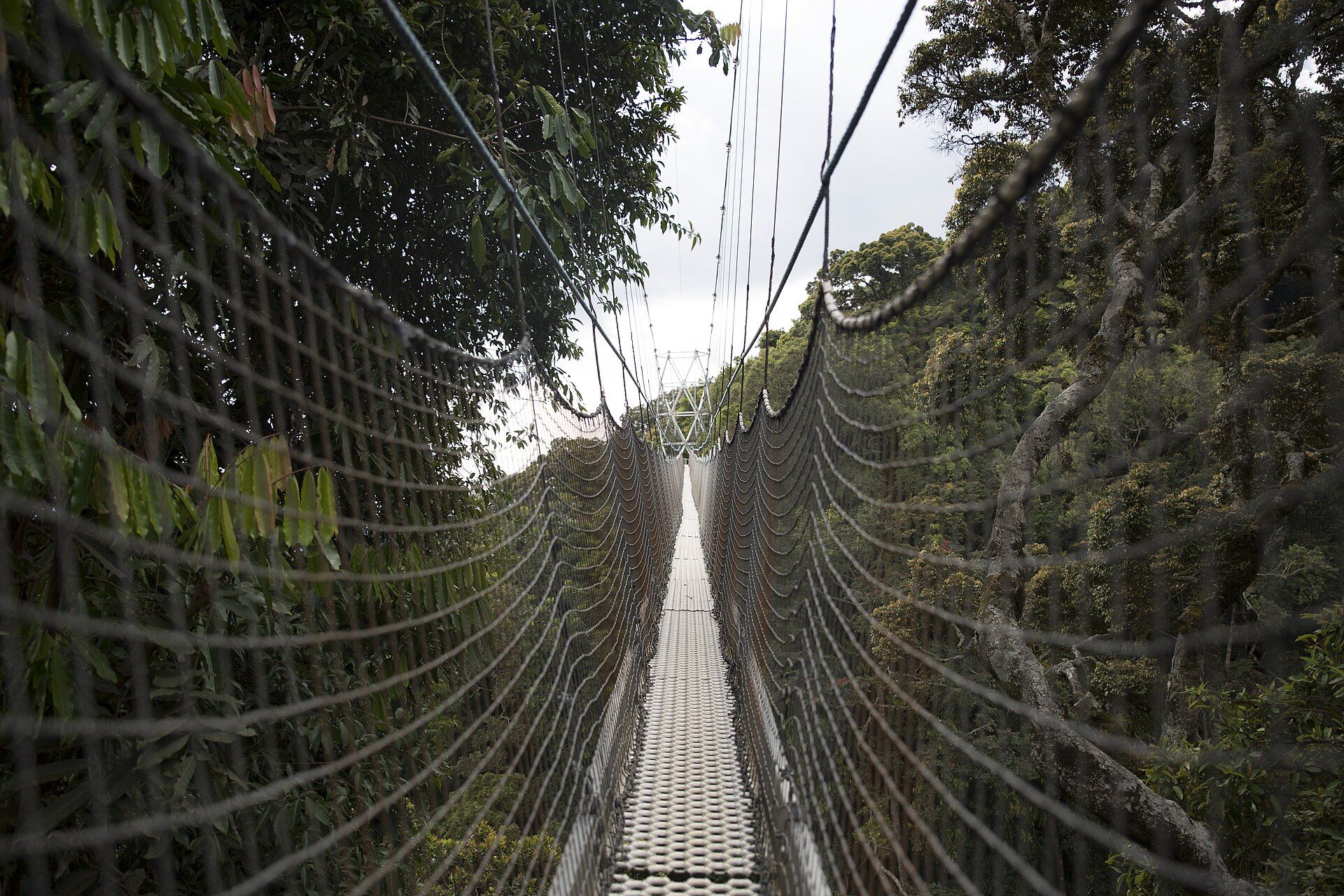
5. Choose lodges that have done the work. Several Rwandan lodges run on solar, harvest rainwater, employ almost entirely local staff and have planted substantial forest. Bisate Lodge's reforestation programme and Singita Kwitonda's nursery are the most documented examples.
6. Avoid internal flights within Rwanda. The country is small and the roads are good.
The other side of the ledger
Carbon is one axis. Here is the other.
Volcanoes National Park exists as protected forest partly because tourism makes it economically rational to protect. Around it, Rwanda has rebuilt the buffer zone and planted hundreds of thousands of trees. Forest that is not cleared stores carbon; forest that is cleared releases it.
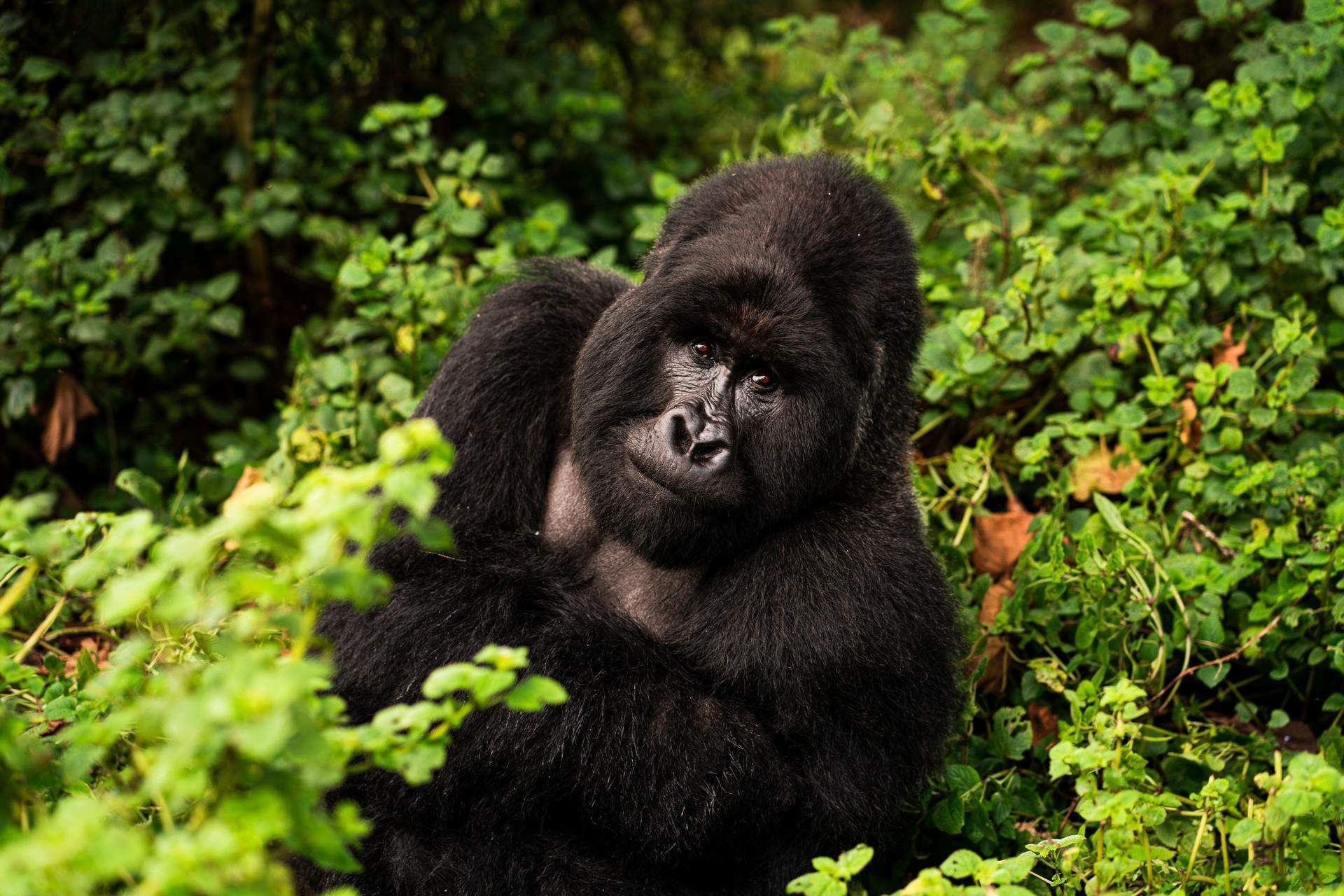
Your US$1,500 permit funds rangers, trackers, veterinary care and a 10% community revenue share. Gorilla numbers have risen from about 242 in 1981 to roughly 1,063 today. Without the economic case tourism provides, the pressure to convert that land to agriculture would be very hard to resist.
This is not a licence to ignore the flight. It is a reason the net picture is better than the gross one — which is not true of most leisure flying.
Rwanda's own record
Rwanda banned single-use plastic bags in 2008, one of the first countries in the world to do so — do not bring any, they are confiscated at the airport. The country also runs Umuganda, a national community work morning on the last Saturday of each month, and has committed to ambitious reforestation and emissions targets.
It is a genuinely clean country, and visibly so.
The bottom line
Fly economy, stay longer, offset the flight, choose lodges that have invested in their landscape, and spend locally. Then go — because the forest you are walking in is standing partly because people like you keep coming.
Frequently asked questions
How much CO2 does a gorilla trekking trip produce?
Roughly 2.5–3.5 tonnes return from North America and 1.5–2.5 tonnes from Europe, almost all of it the flight. Everything in Rwanda typically adds under 0.2 tonnes.
Is gorilla trekking environmentally responsible?
The flight has a real carbon cost, but permit revenue funds forest protection and community programmes that make conserving Volcanoes National Park economically rational. Mountain gorilla numbers have risen from about 242 in 1981 to roughly 1,063.
How do I offset a flight to Rwanda?
Use a Gold Standard or Verra-certified provider; a return flight typically costs US$30–80 to offset. Projects in East Africa, such as cookstove and reforestation schemes, keep the benefit close to your destination.

Written by the Eben Safari Tours team
We are a Kigali-based tour operator, guiding travellers through Rwanda, Uganda, Kenya and Tanzania since 2015. Our guides trek with the gorillas, drive Akagera and climb the volcanoes every week, and we update these guides whenever rules or prices change.